David Lean — the Man Who Never Made A Bad Movie
An Overview and Ranking of David Lean’s Complete Filmography
This overview essay follows Lean’s career chronologically and offers a ranking at the end. It’s not a full film history or a biography—you’ll want David Lean: A Biography by Kevin Brownlow for that. These are only my opinions, but I think this lengthy review is worthwhile because, despite Lean’s stature, over half his films are generally ignored despite the fact that they are all excellent or at least good. In fact, he never made a bad one.
IN WHICH WE SERVE (1942)
Starring Noel Coward, John Mills, Bernard Miles, Celia Johnson, Kay Walsh, and Richard Attenborough.
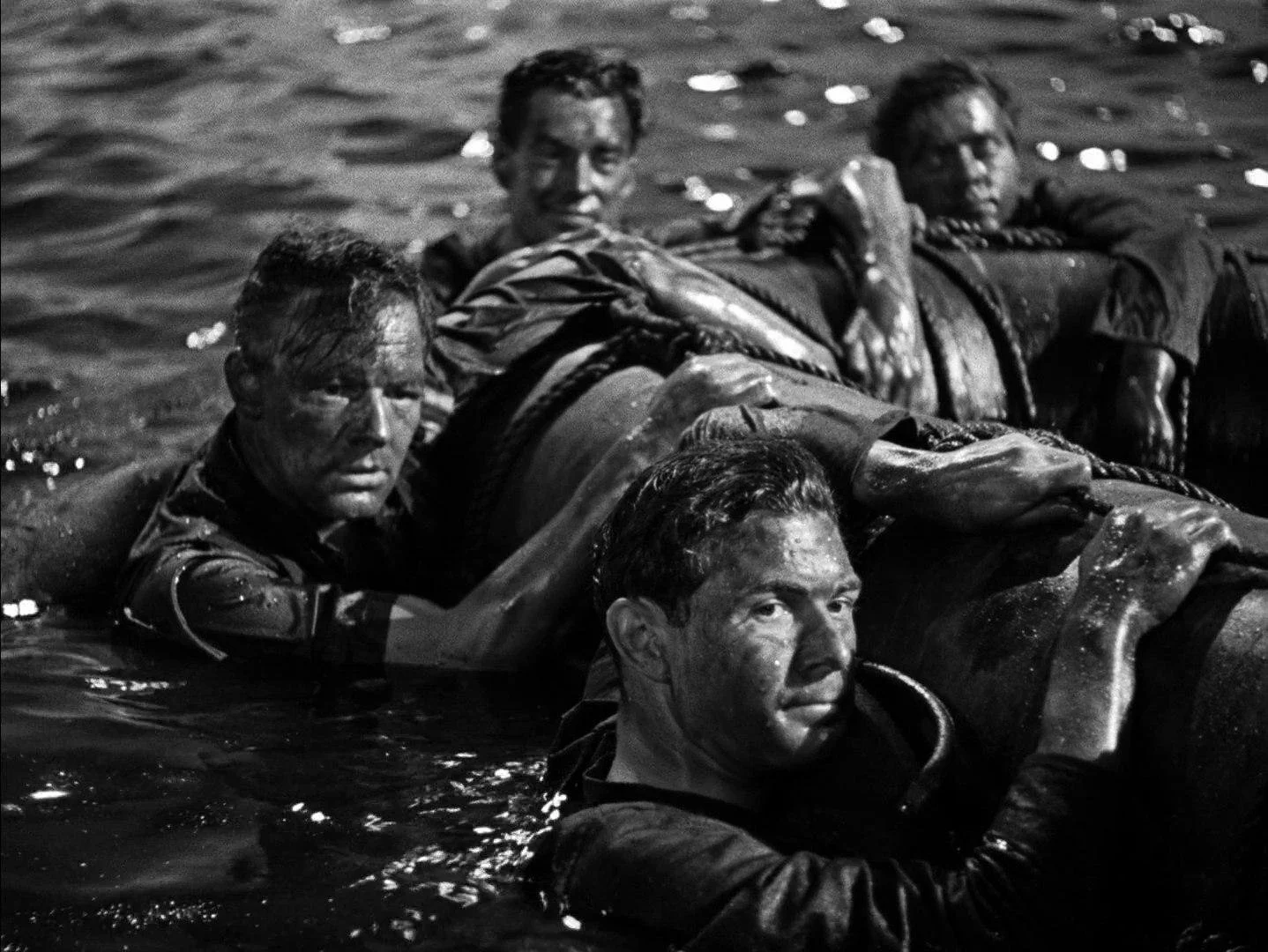
Lean’s directing career begins with co-directing a movie with that strangest of British cultural phenomenons, Noel Coward. The flamboyant Coward also worked for the British government’s war propaganda effort, and the In Which We Serve (1942) has him both behind and in front of the camera, with Lean as co-director. On camera Coward is a navy captain who is also a family man. One day a torpedo hits his boat and he and his men are left hanging on various flotillas. As they linger in the water we watch past episodes in each sailor’s life. The film is nostalgic. What circumstances led each man to this terrible moment? The survivors are picked up, and life, despite its tragedies, goes on. The result is a feel-good (read “stiff upper lip”) war service drama that hardly gives us enough time to enjoy any particular storyline. You do root for the men’s combined efforts, however, and there is an outstanding scene in which young Richard Attenborough’s character (his debut) fails in his part to load a missile, and the consequences that follow. The editing and transitions are really smart and innovative and keep the film barreling along.
THIS HAPPY BREED (1944)
Starring Robert Newton, Celia Johnson, Amy Veness, Kay Walsh, and John Mills.
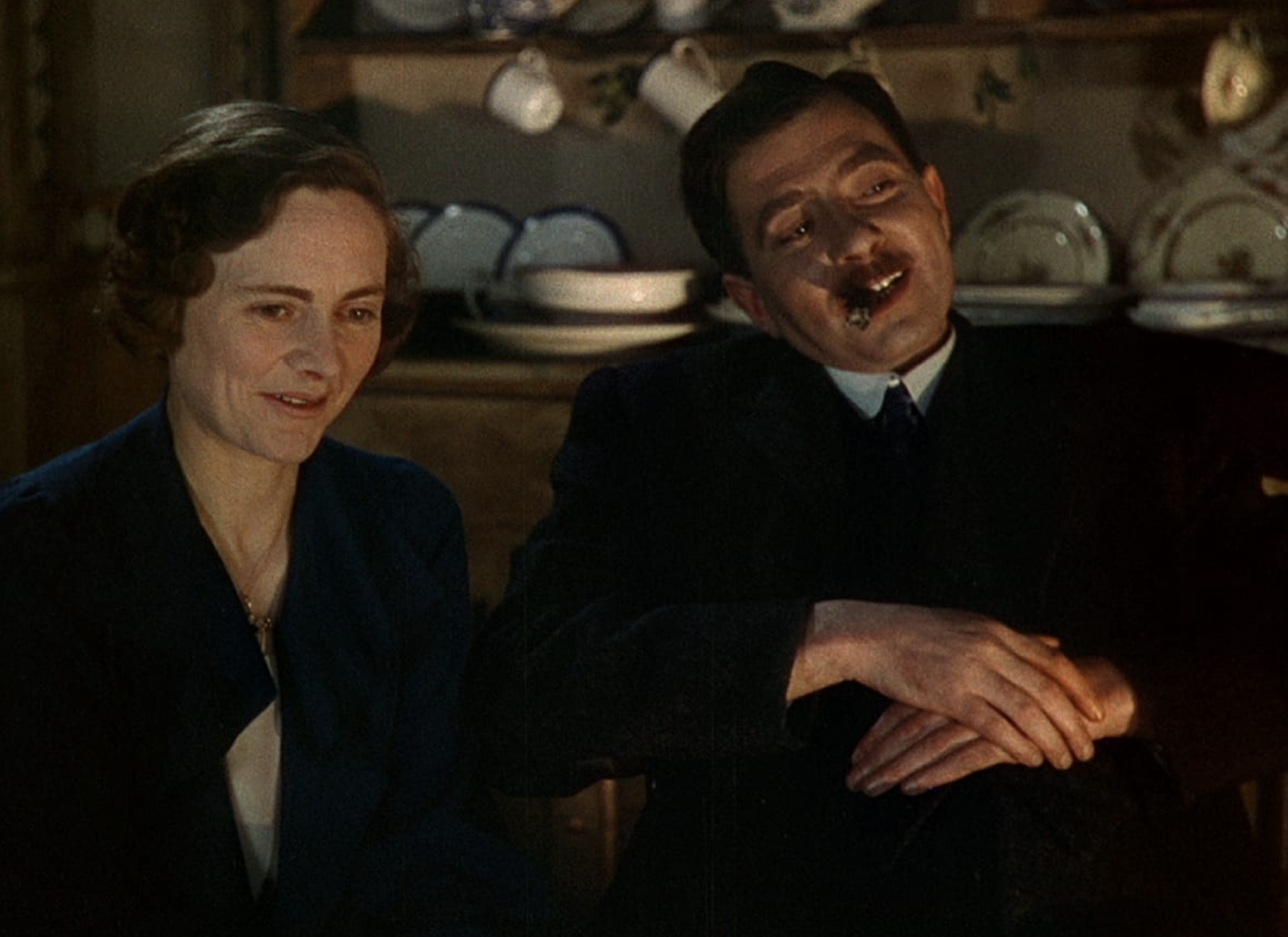
Another Noel Coward adaptation, This Happy Breed is a family saga taking place between 1919 and 1939, placed almost entirely inside a single household set. There are other family wartime dramas like it—Mrs. Miniver, How Green Was My Valley, The Best Years of Our Lives all won Best Picture—but I think this one is better. The plot necessitates, of course, too much life for one family, but that’s the nature of drama. Adapting plays is treacherous—the possibility of becoming stultifying is an ever present danger. Dialogue and characters might be buoyant and colorful onstage, but on film these factors sometimes translate as overdrawn and “vibrance” can be exasperating. Whether This Happy Breed successfully avoids this is up to the viewer’s taste. A chamber drama in parts the film is never boring, and Lean’s direction is unfussy and sure-footed. When there is danger of mush he brings a cool breeze to dispel it.
BLITHE SPIRIT (1945)
Starring Rex Harrison, Kay Hammond, Constance Cummings, and Margaret Rutherford.
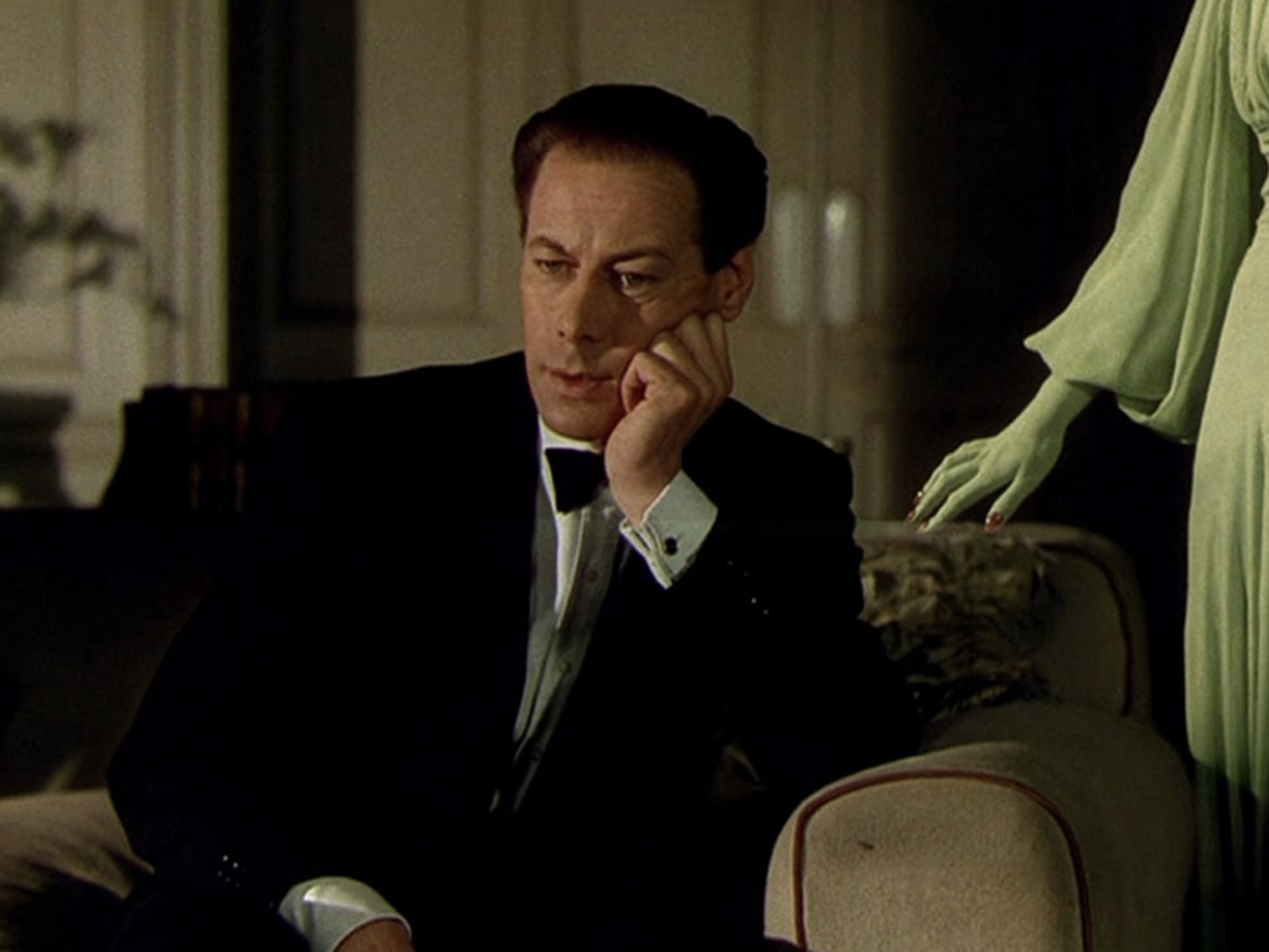
Coward must have approved of Lean’s direction because the adaptations continued. Blithe Spirit is a humorous ghost-fantasy with light-hearted performances. Rex Harrison’s just-remarried widower begins seeing the spirit of his dead wife (Kay Hammond) and brings in a medium (Margaret Rutherford) to try and control her, with expectedly hilarious results. Critics have remarked on its interior stuffiness. Apparently this was due to Coward’s advice for Lean to “just photograph it,” (the play). The humor is hardly laugh-out-loud funny, but it is endearing and chuckle-worthy. A number of (mildly) risque one-liners are interesting not for their prurience, but because it gives us a snapshot of what was acceptable at the extreme of popular culture in British cinema in 1945. The film is a delightful, if forgettable, experience.
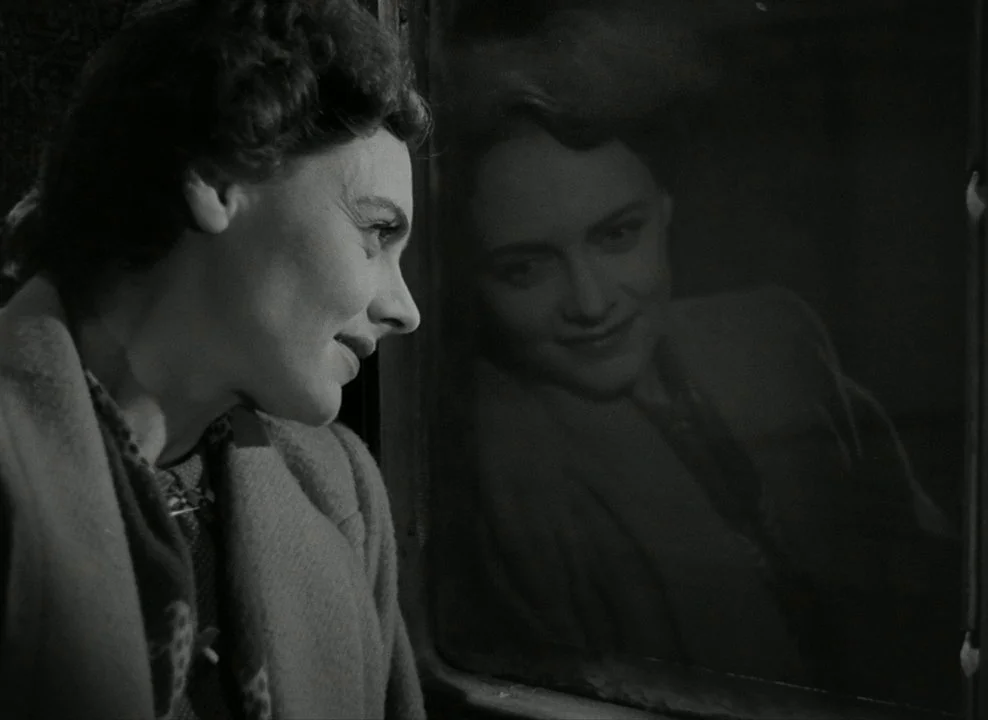
BRIEF ENCOUNTER (1945)
Starring Celia Johnson, Trevor Howard, Stanley Holloway, and Joyce Carey.
Though dissatisfied with Lean’s version of Blithe Spirit, there was one more Coward play to film. Brief Encounter is Lean’s most famous title after Lawrence of Arabia and The Bridge on the River Kwai. It’s also about Lean’s most frequent film subject, the extra-marital affair. The film is entirely theoretical in its telling: a woman recounts to herself in her head, in the manner she might hope to relate to her husband (the film is almost over-narrated) her brief and unconsummated affair with a handsome stranger she met at the train station. The story unfolds bittersweetly to the strains of Rachmaninov’s romantically enveloping Piano Concerto No.2. Though sympathetic to the affair itself, the film resolves with the woman returning affection upon her husband and her son.
It’s easy to say the movie is torn about the affair because the times dictated as much. Yet it was an immediate success at the box office and has been consistently hailed as one of the greatest films ever since. There is an overarching tenderness and humanity to Lean, one which his book sources often do not share, which I think helps bridge the subject matter of Brief Encounter to a wider audience. Lean is generous about human nature while preserving a sense of dignity. The film’s greatness is in its briefness, its portrait of fleeting desire, and the underlying dignity of each human which is either fulfilled by love, or by duty, but always to the tune of “life is complicated.”
GREAT EXPECTATIONS (1946)
Starring John Mills & Tony Wager, Alec Guinness, Valerie Hobson & Jean Simmons, and Finlay Currie
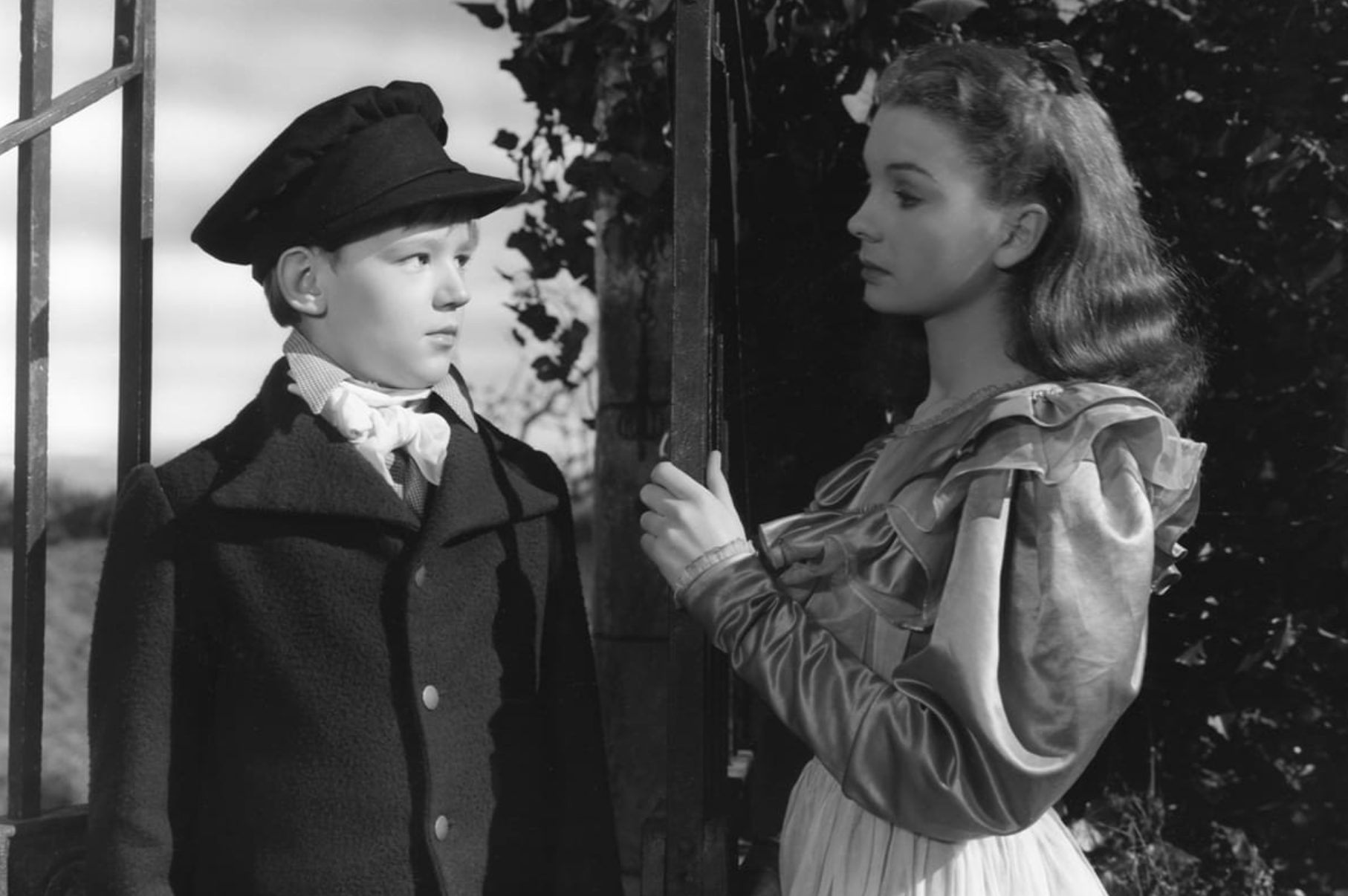
Great Expectations is a great adaptation. Though rarely cited as such, Great Expectations is Dickens’ major gothic novel. Think about it: the decaying bride and cake and decrepit house (never did a minor character live so long in the public imagination as does the name of Miss Havisham), the mist-strewn Welsh moors, and the cruel and cold beauty of Estella. The ghosts of the past come to haunt the present. Following the childhood, schooling, and career of its central character Pip, the novel rests upon a secret— who is the benefactor behind the career of Pip, a young man with otherwise poor prospects? The film spends quality time with Pip's childhood, and David Lean is to be commended for allowing the literary-ness to shine. I never stopped to think, “and that had to be done because film is a different medium,” an increasingly tedious — and often untrue — explanation you hear these days for changing a story to film.
The thrust of Great Expectations, with the middle of the book being a waiting period, is a growing out of childhood. When all is revealed, when the events of the past are brought to fruition in the present, our protagonist Pip will be transformed.
The casting of grown-up Pip is flawed. John Mills is good but too old. Alec Guinness as his best friend Herbert Pocket is a lot of fun. This is a side character from the book that I always remembered fondly, and it makes so much sense that Guinness played him. Despite the oldness, these are expert actors and there’s never a badly acted scene.
I didn't remember the film’s ending from the book. I believe, when I first read it, the Signet Classics or Bantam edition contained the original sad ending as the real ending, and the happier ending in the back as an appendix, which I didn’t read. The happy ending is the one the film uses. Even so, I still loved it. A wonderful experience.
OLIVER TWIST (1948)
Starring John Howard Davies, Alec Guinness, Robert Newton, Anthony Newley, Diano Dors, and Kay Walsh.
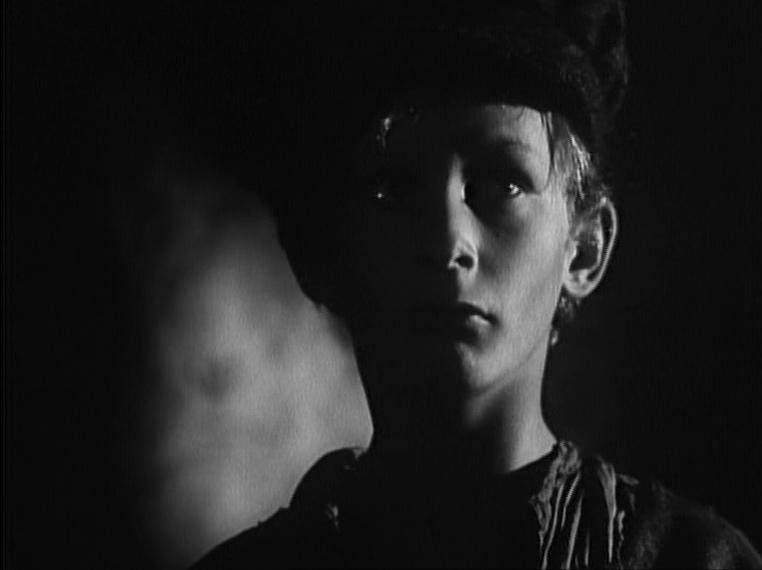
Oliver Twist is a book I’ve read but seen many more adaptations of, and having seen this version after all those, this review is oddly difficult. There is the 1969 musical, numerous versions starring cartoon animals, the 1995 and 2005 films, but especially the 1999 Acorn miniseries with an unforgettable Andy Serkis as Sykes. What other adaptations have emphasized Lean glides easily past. The days in the orphanage, the undertaker, and the first days with Fagin, Lean deals with summarily. Because of that, the middle material where Oliver's real heritage is revealed, and which has always been a bit slow going (the book makes it more interesting), bears more burden here than it should. But Lean serves up pictures in spades , transforming every scene into a chiaroscuro painting— every frame draped with charcoal blackness. Few classic film noirs are this dark! Oliver, and the other innocents, glow with an angelic light, candles in the dark.
The casting is superb. There have been some incredible performances in all the versions of Oliver Twist— Serkis as Sykes, I must mention again —but this film is nearly flawless. John Howard Davies as Oliver has the right combination of innocence and intelligence. Fagin, Dodger, and the rest are ideal. The only misstep is Kay Walsh as Nancy. To me, Nancy needs to really be rooted in the underworld. Here, she is not. A mismatch for Sykes, she bears none of the emotional scars he'd have inflicted on her. An otherwise excellent actress (and one of Lean’s seven wives), here she is simply miscast.
The last 30 minutes really bear the weight of the excitement, and it is here that the movie takes off. Dickens was wise and inventive with his plots, as the story shifts from Oliver’s parentage to Nancy's decision to save him from Sykes’ fury. She shines beautifully like an angel, the sort of pure-of-heart character we love reading Dickens for.
Lean’s adaptation serves the source material beautifully, if not totally justly, and it remains an essential film.
THE PASSIONATE FRIENDS (1949)
Starring Ann Todd, Claude Rains, and Trevor Howard.
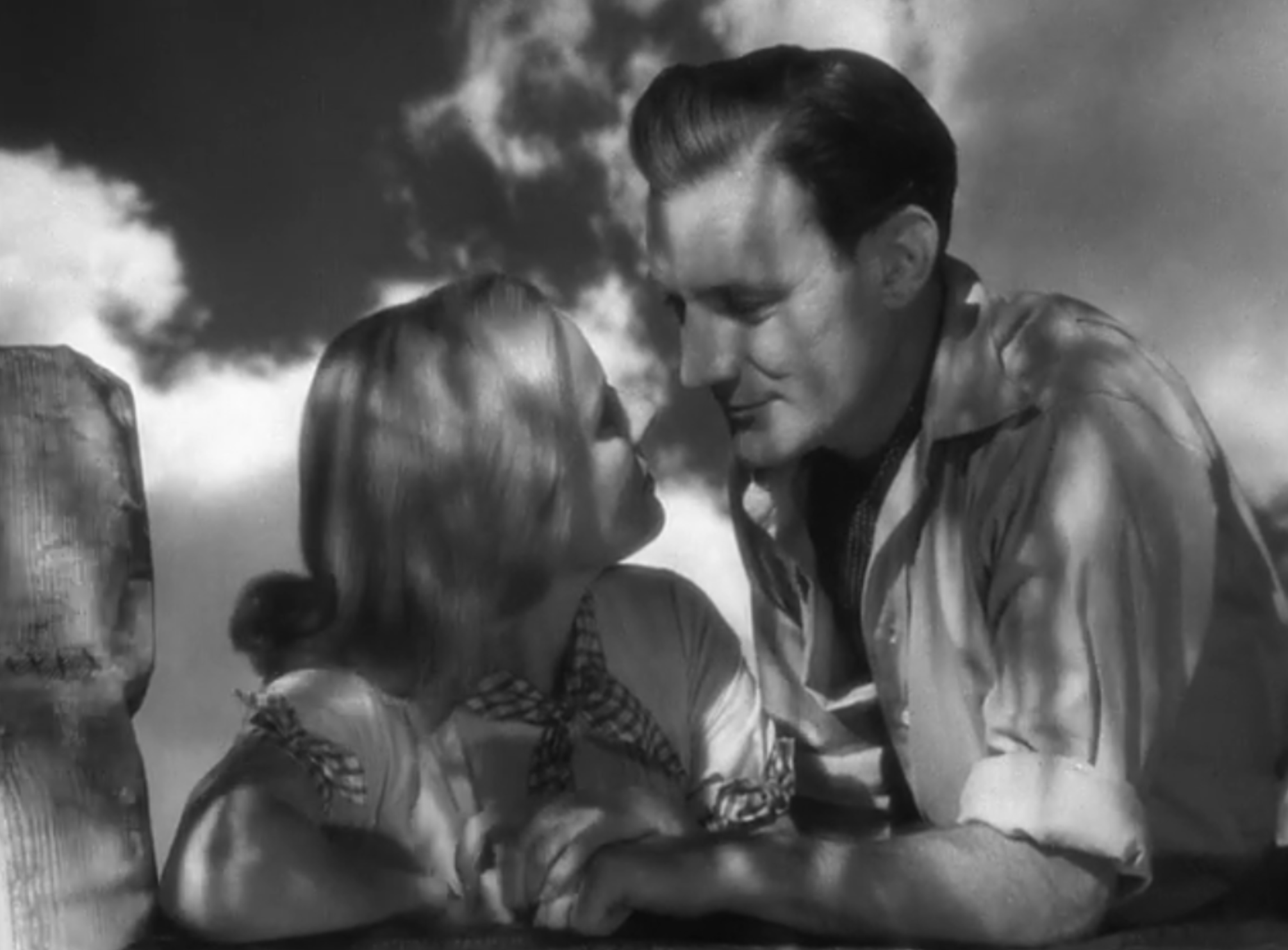
The Passionate Friends is based on an improbable source: a 1913 novel by H.G. Wells. I haven’t read it, but the Wikipedia entry reveals how different the futuristic setting is from this quiet little romance film. Eric Ambler, no less, is one of the script writers. It’s an odd film because it’s about two people who fall in love…and then discover it’s an illusion. They don’t love each other. Imagine if Double Indemnity left off after the initial meetup of Fred MacMurray and Barbara Stanwyck. Claude Rains plays the goodhearted but irritable and suspicious husband. Ann Todd, Lean’s then-wife and collaborator, stars as the wife who takes an affection to Trevor Howard’s unassuming everyman. There is no hint of Wells’ future society, nor of an open conspiracy for a one-world government.
Whether Lean is looking over his shoulder at social critics, or if this affair represents a genuine experience from his life, I don’t know. But I tend to think that he is, and it does. As an infamous philanderer of the era, this film’s plot makes him look and sound downright morally against extra-marital affairs. So, the film functions ironically, but not insincerely, as a testament that sometimes a want is just a want, and that it takes some character to make marriage work.
MADELEINE (1950)
Starring Ann Todd, Leslie Banks, Norman Wooland, Ivan Desny, Eugene Deckers, and Andre Morrell.
With Madeleine we have the first screenplay since In Which We Serve that is not an adaptation of a literary work. Based on the real life of Madeleine Smith, the film doesn’t project its plot at all, making the midpoint turn of the film a genuine surprise (as long as you skip plot summaries). I’ll attempt a review without disclosing it as well. It follows a well-to-do family in Glasgow. The father wants his oldest daughter to marry Mr. Minnoch. Unlike other unwanted suitors in films, Minnoch is not only a decent man, but eligible, desirable, and kind. But Madeleine is already in love with the Frenchman Emile L’Angelier. She and her mother are of French stock, so there is a natural affinity in their relationship. She and L’Angelier marry in secret.
The middle of the film is very carefully constructed, and then we are off to the last third of the plot. The strength of Madeleine is its setting and trueness to the time (1850s Scotland), and its procedural attitude. Lean felt it was a personal failure, and Noel Coward told him it was because there were no characters to love. But Ann Todd, who urged him to make it, loved it and said he “did it beautifully.” And he did! Far from being a negative, the procedural narrative allows us to sit back at a distance and consider the happenings in a way that most films, especially films on similar subjects made in the same period, simply don’t. Among Lean’s least-known films it is my favorite.
THE SOUND BARRIER (1952)
Starring Ann Todd, Ralph Richardson, Nigel Patrick, John Justin, Dinah Sheridan, and Denholm Elliott.
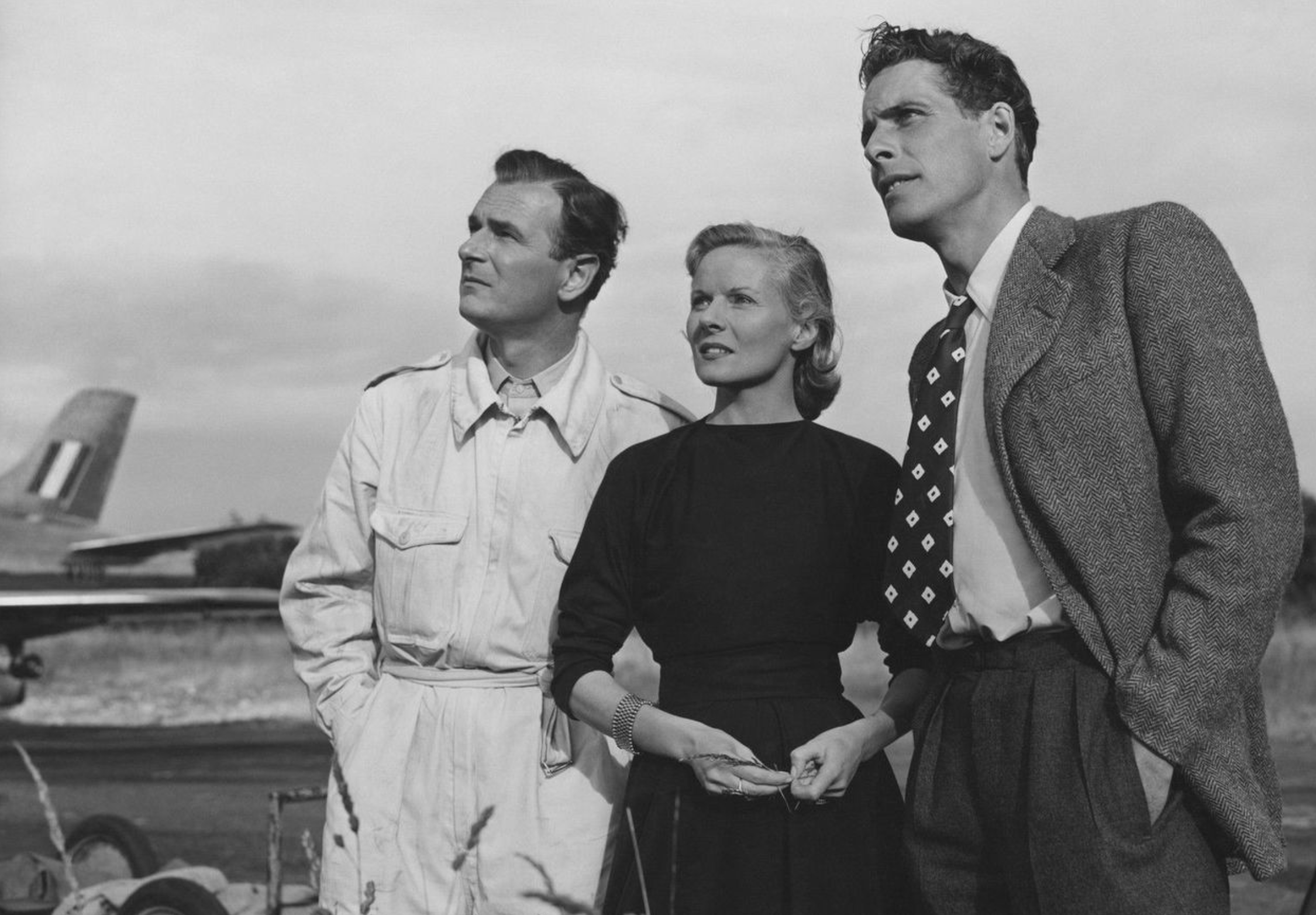
The Sound Barrier is a technical and patriotic effort for Lean. But it’s a testament to his good sense and craftsmanship that even this, his most pedestrian effort, works as well as it does. He does, after all, rely on the repetition of the flight experiments to carry us through an extended timeline. British pilots perish attempting to achieve what Ralph Richardson’s scientist-engineer is trying to achieve with his special plane. “Madness! Madness!” we should cry, but this is stiff upper lip stuff. Ann Todd’s dutiful daughter watches with increasing horror as this goes on until she can’t take it anymore. But she cannot leave it alone. Very stiff upper lip indeed, and the film leaves no question as to the morality of this effort — it is moral as well as brave, and willing pilot daredevils are putting their lives at stake for this common greater good, which all should support. And yet, the film lets you have your cake and eat it too, on this question. It’s all built in. It’s also one of those films which gives you the feel of a science fiction tale without being one.
HOBSON'S CHOICE (1954)
Starring Charles Laughton, Brenda de Banzie, and John Mills.
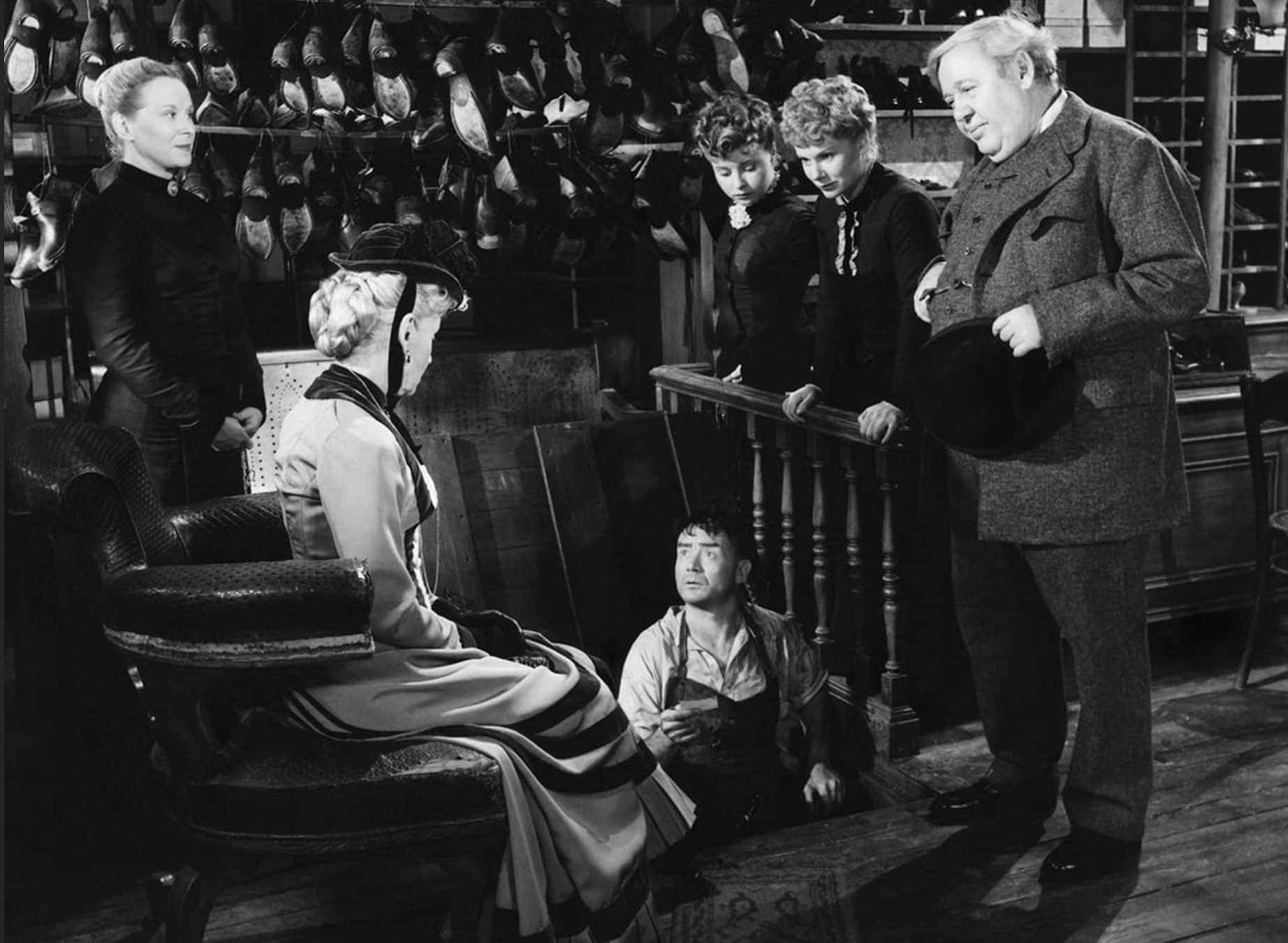
A delightful and quirky British class comedy set in a small town in Manchester in the 1880s. Maggie, a bootmaker's daughter (Brenda de Banzie) sets the lives of her father and sisters spinning when she decides to marry his assistant bootmaker, the seemingly-witless but in fact talented Will Mossop, played to perfection by John Mills. Charles Laughton’s patriarchal Henry Hobson is not as jocund as you might suspect—although girthy and humorously hapless, he’s also imperious, tightfisted, and clearly resting on his laurels. Will Mossop and Hobson’s daughters are the real force behind the bootmaker’s current success. Maggie takes Will in hand, is essentially disinherited, and sets up shop in a basement-level apartment on the poorest street. The story is the tug-of-war between two wills, Hobson holding on to his property, and Maggie striking out on her own. What’s fascinating is that these are not opposed ideologies— Maggie is brave and fearless, but she is also just as industrious as her father thought he was. I leave out the gentler machinations of the plot where all the fun is to be had. The acting is superb, especially Brenda de Banzie who is unforgettable as Maggie. At an hour forty-eight, this is time well spent with not a minute wasted. By goom, it's good.
SUMMERTIME (1955)
Starring Katherine Hepburn, Rossano Brazzi, Isa Miranda, and Darren McGavin.
Lean said Kwai marked the second half of his career, his “filming outdoors” era. Perhaps because it is small-scale compared with the following films he didn’t count Summertime, which takes place outdoors in a real location and which, despite its story, has a feeling of open spaces that all the previous films lack. It’s also a return to color.
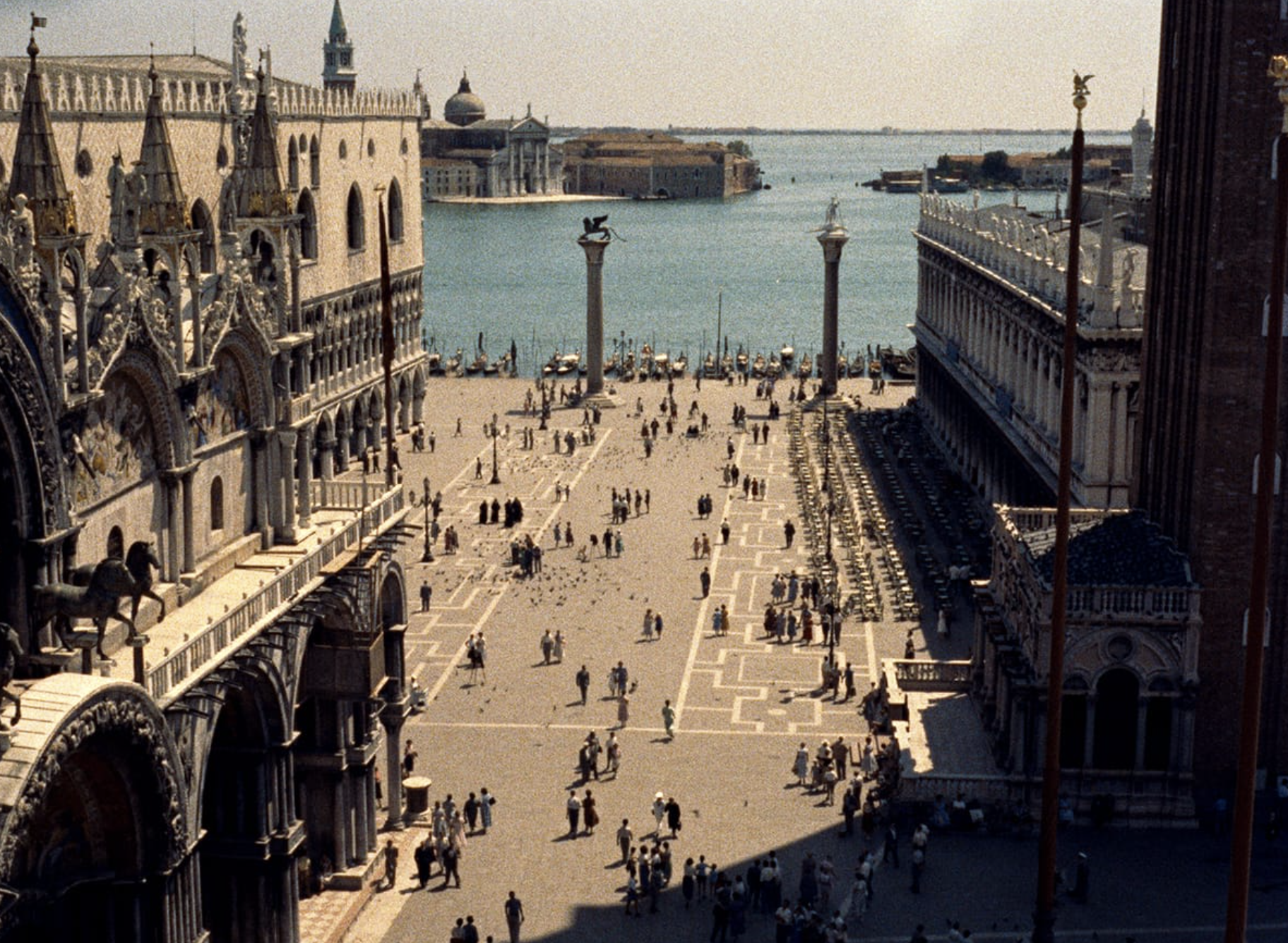
This is the only Lean film that I feel fairly negative about. I respect rather than love the work of Katherine Hepburn. Rossano Brazzi shows up in a number of films that I like, but he always has the effect of a wet blanket. Hepburn’s spinster persona shines in The African Queen because her character has religious reasons, if not obligations, for being unmarried. Her romance with the roguish Charlie Allnut is mutual and beautiful. But in Summertime we have what, a snappy old maid who is taken with a younger married Italian man? He really only wants to sleep with her, and the whole thing turns out to be mercenary love on both their parts—he wants American money, and she, realizing her love was only love of a first romance, doesn’t feel a loss at their final separation. It's meant to be tender and bittersweet, and many will find it so, but I don’t. Even as I recollect it now, I like it even less. But that’s purely personal on my part, and it’s hardly a bad film. Venice is wondrous to look upon, and camera indulgence for that purpose is allowed all day long, in my book. It's the character of the city which keeps me glued to the screen. It’s also fun to see a young Darren McGavin, the dad from A Christmas Story.
THE BRIDGE ON THE RIVER KWAI (1957)
Starring William Holden, Alec Guinness, Jack Hawkins, Sessue Hayakawa, and James Donald.
I've seen Kwai many times, but never with the benefit of having seen all Lean's other films. Rewatching it chronologically had the surprising effect of allowing me to appreciate Kwai as the unique film that it is—as Lean's first international epic. One feels Columbia's demands and influences—demands that were met to grand effect. Yes, a romance is smushed into the movie (“there must be a love interest!”), but because of that we also get the delightful Ceylon women, non-professional actresses, real tough ladies, joining the mission into the jungle.
"Lovely."
The bridge blow up sequence, this time, was characterized by the aching suspension in horror as the explosives around the bridge are discovered. The sudden lowering of the river during the night is one of the most ingenious turns in a film ever, I think.
The Bridge On the River Kwai is a lot weirder than you’d suspect. Lots of folks contrast Holden’s American cynicism with Guinness’ dutiful patriotism and leave it at that. But the cynicism of Holden’s Shears (hold on to that metaphor) if you’re looking at it as American vs. British attitudes, is twice belied. The film is based on the novel by French writer Pierre Boulle about his own experiences as a POW in a Japanese camp. Boulle also wrote the novel behind The Planet of the Apes. The most quoted lines in both films are exclamations of outrage after something gets blown up. (“You maniacs! you blew it up!”/“Madness! Madness!”)
Kwai’s point-of-view is again belied by its American and British interpreters of Boulle’s novel. Screenwriters Carl Foreman and Michael Wilson were both blacklisted from Hollywood at the time the film came out. Boulle received the Academy Award for adaptation despite not having written a bit of it. (Wilson also went on to write the script for Planet of the Apes).
The screenwriter’s anti-western leanings did not go unopposed. Alec Guinness was critical for how Nicholson and the British war effort were portrayed. After all, this is a film in which Nicholson is so stodgy that he’ll subject himself to torture in order to win back some rules and orderliness for his soldiers. “This is war!” shouts Sessue Hayakawa’s beleaguered Colonel Saito. Not so for Nicholson, who must have order to the point of absurdity, willingly building the enemy’s bridge (a very good one) for them because it means civilization. Nicholson, craving this, ignores Saito and Shears telling him point blank that he’s missing the bigger picture. This is why Guinness objected— he didn’t believe in that caricature. Perhaps because of this, his portrayal pulls us a bit in the opposite direction. He can’t resist the script, but he can (ironically) subvert the intention.
And so we have French novelist depicting the British, adapted by blacklisted American and British screenwriters, directed by a middle-of-the-road Englishman, a British leading man who resists the script, an American leading man (Holden, a lifelong Republican but never vocal about politics, and also a 10% shareholder of the film’s profits) ostensibly representing American (but really communist) skepticism of English propriety. What conclusions are we to draw from this maelstrom of ideologies? Hard to say. Somewhere between both ends of the bridge it all blows up and we get a great movie.
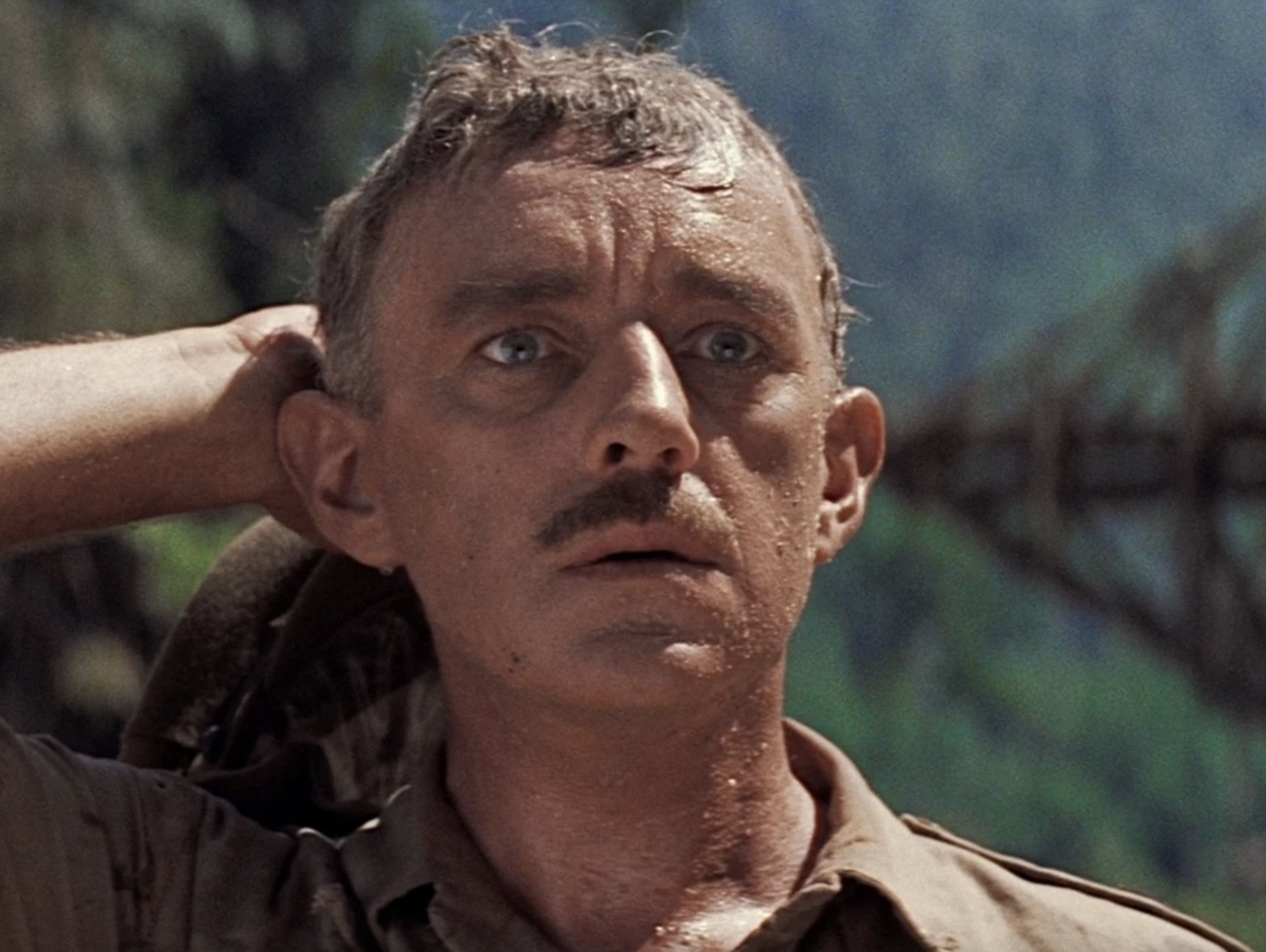
LAWRENCE OF ARABIA (1962)
Starring Peter O’Toole, Omar Sharif, Alec Guinness, Anthony Quinn, Jack Hawkins, Arthur Kennedy, and Anthony Quayle.
1995. We’d just moved to a new house but the central heating hadn’t been turned on. My dad rented a pile of VHS tapes, Lawrence of Arabia among them. The film’s 1989 restoration was a big deal back then (and still is)—Lawrence as it was meant to be. In that cold unfurnished bedroom the four-hour epic unreeled before me. The music and vast desert, projected into that small tube TV-set, making a lasting impression.
I've seen Lawrence many times since then. Perhaps too often. Perhaps. Somehow it doesn’t dry up. The rescue, the execution, and Ali's tears for Lawrence's lost humanity and friendship are still powerful enough to evoke adult tears.
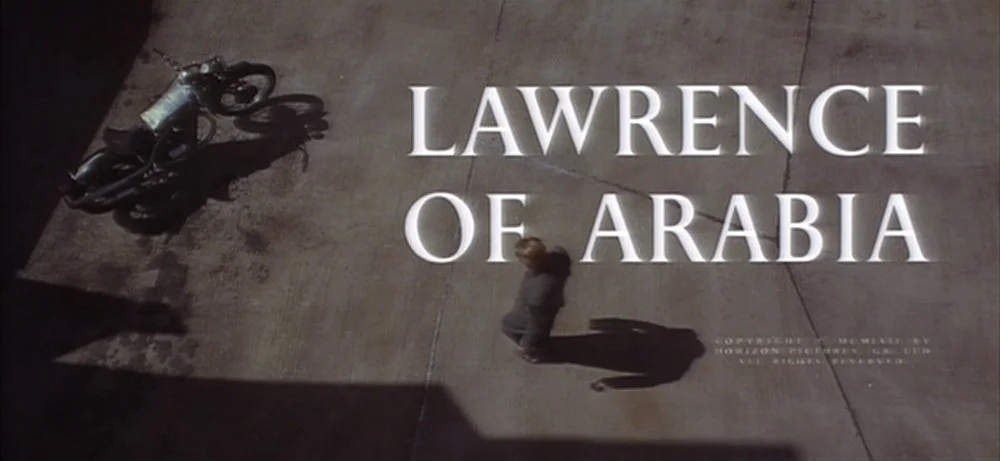
Lawrence is a film that is wrapped up. We open with two musical introductions, the motorcycle ride, and then the memorial service when we finally hear human voices— but they’re droning voices, and serve to mystify the legend. Donald Wolfit’s aging General Murray recalls that T.E. Lawrence began with his small outfit in Arabia, and we linger on that word as we cut to a sweaty little basement bunker where we finally meet the hero. Which is odd, because we’ve already seen Lawrence fixing up his motorcycle and riding it. But not clearly. We see him from above fixing his motorcycle, and even when the camera is right in his face on the motorcycle, he wears goggles and the dappled sunlight never lets us square up with whom we’re looking at. And thus the epic builds its enigma. In the initial tent meeting with Prince Faisel, which I’d always taken as a bit of roping about between the good stuff, is framed around Lawrence’s enigma. Faisel doesn’t understand Lawrence’s hopeful ambition—like Gordon of Khartoum, these British military heroes are unfathomable. Faisel would rather do cold business with General Murray and Allenby. Another scene I’d never taken heed of— right after Lawrence decides to take the ragtag group into Deraa, Brighton and Allenby discuss Lawrence “going native”. This little scene, cozy, perhaps even unnecessary (it was cut and then restored in 1989) shows Allenby and Brighton to be normal men, just as Lawrence's ego has ballooned to its biggest.
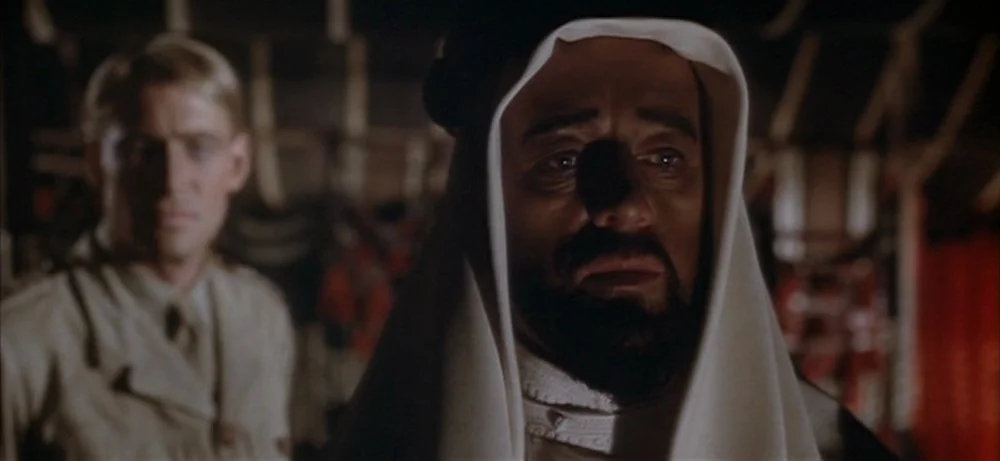
Lawrence, eccentric and idealistic, pushes the Arabs to achieve their own nation. Yet, he has a destructive — and self-destructive — quality. No kill in a gangster movie is more cold-blooded than those executions he carries out himself. It is precisely because he is not a criminal, because he embodies dignity to the people around him, that they are so cold. The Arabs, used to such necessities, don’t judge Lawrence’s heart. Biographers revealed this tendency on an entirely different level. Bolt’s script is more interested in Lawrence’s motivations as a mix of ambition, egotism, and self-doubt. Bolt’s focused character study is satirical, but not the cheap kind that makes fun of everything and leaves, but the kind that closely resembles life— a tragicomedy of ambition that becomes self-rebuke and resignation. Lawrence's brutal awakening to his weaknesses are contrasted with Auda's grudging care for his friends, and Ali's tears for his friend and hope for his country. Lawrence is emptied of everything. He leaves Arabia as a man who, shaken from a madness, wants to return to normal British life.
Lawrence of Arabia is the greatest film of all time. I'll fight for that. More than that, it's a friend I revisit often, ready to tell me something new. It has for a long time been, and remains, my favorite film.
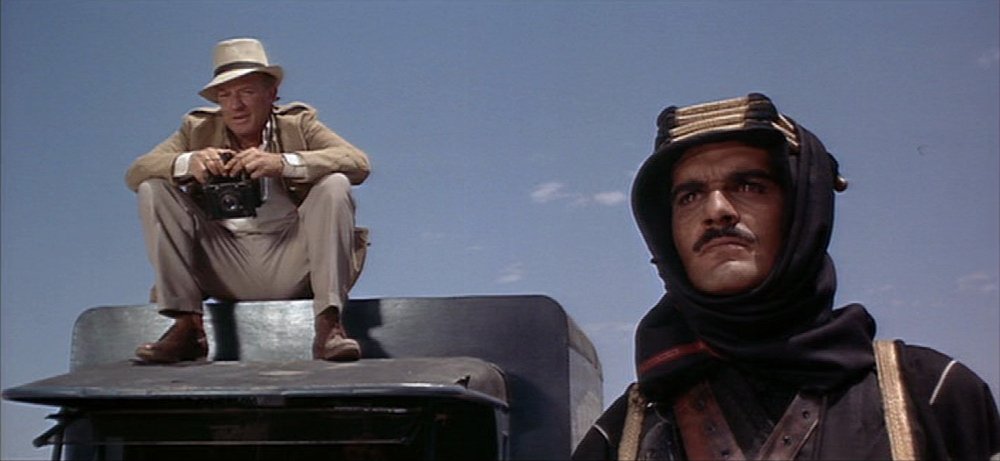
DOCTOR ZHIVAGO (1965)
Starring Julie Christie, Omar Sharif, Alec Guinness, Geraldine Chaplin, Rod Steiger, and Tom Courtenay.
Doctor Zhivago is far from my favorite film, but falls in that category which I still call great. The Last Emperor, The Assassination of Jesse James by the Coward Robert Ford, and The Witch are others I feel the same way about. Excellent and perhaps enjoyable, they don't inveigle their way into my affections. I saw Doctor Zhivago for the first time years ago on VHS, but well into the DVD era — an important detail. In dvd cases every movie has the same standard rectangle case. But in the VHS era you understood better that some movies were BIG. Lawrence of Arabia, Ben-Hur, The Ten Commandments, Quo Vadis, Cleopatra, and...Doctor Zhivago. Those double video-tapes sets meant you were in for a long epic journey. That fact by itself was exciting— a feature, not a bug. I mention this because Lean famously joked that whenever he made a big production it was like being one of the last traveling circuses.
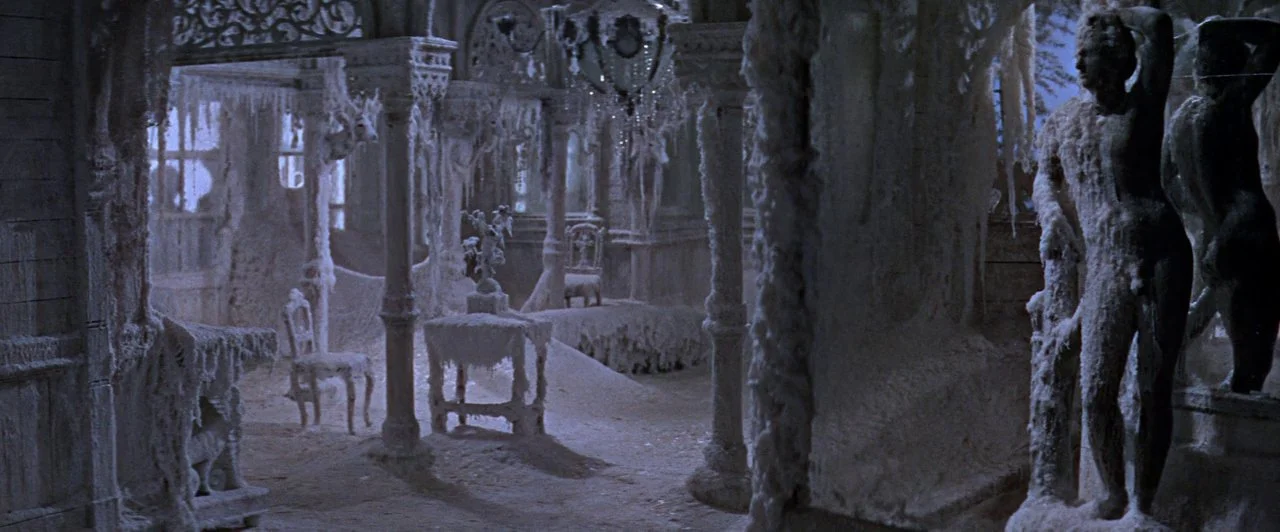
The story of Doctor Zhivago is a tragedy-romance, one based on a startling and disturbing fact. The rape of Lara by Komorovsky and its consequences form the central event on which the story must evolve. The scene is not graphic, but burns into your mind. We’re meant to be horrified, of course, and to never forget it.
Lara endures.
Zhivago, a poet, is making his own way. He is married when he meets Lara. I don't know what it is about British and Russian cultures, but in film they treat affairs with a sort of cold, inevitable dignity. They don't say they are moral and they don’t say they aren’t tragic (in contrast, the French treat them humorously if not casually), but the women involved are never shown hating each other. It had to be David Lean, British, and a chronic philanderer, who made the film version of the book.
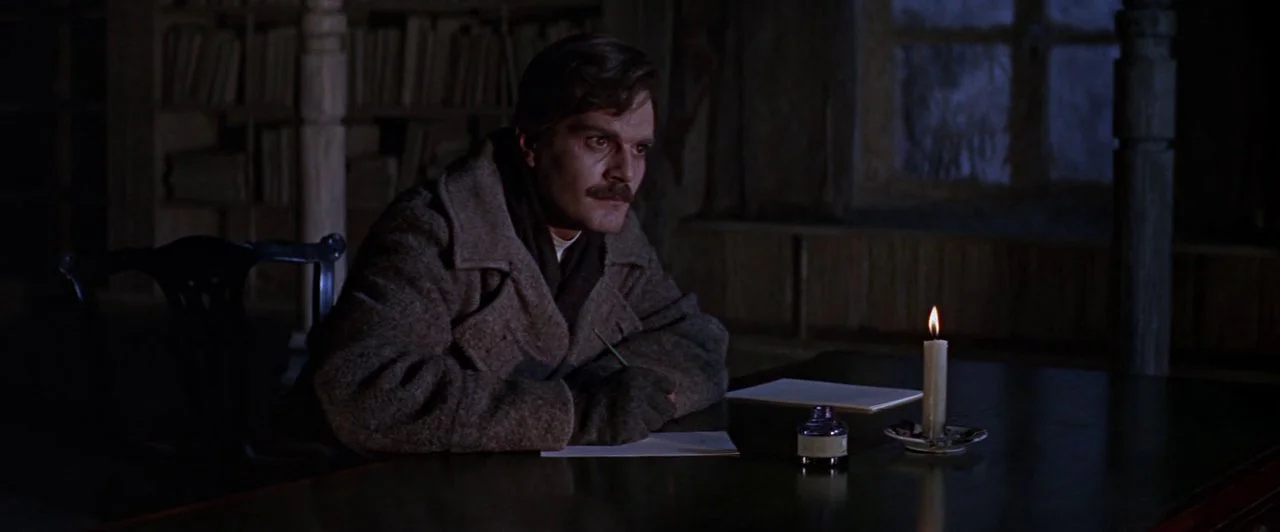
With its director and cast (and filmed in Spain) the film is perhaps more British than Russian, offering no extreme position on politics. Zhivago’s reality is one that hates extremes. I think that was Lean’s position too, who was patriotic but not a jingoist.
The story is a picaresque chronicle, not a true history, and so it glides by, beautifully evocative but insistently unphilosophical. Even love is not its philosophy. Only Zhivago’s love for Lara matters. The ugliness of the world around them, in contrast to their love, mattered only because it was an interruption of their love. Pasternak’s necessary critique of Soviet politics was aimed at a western audience, but with a White Russian (non-communist) as its cruel villain to gratify the politburo at home. So it isn’t perfect, but it is grand and beautiful and a tapestry of life— the sort of road show spectacle they simply don’t make anymore.
THE GREATEST STORY EVER TOLD (1965)
This is not, properly speaking, a David Lean film. It was directed by George Stevens. David Lean directed the scenes with the two Herods, played by Claude Rains and Jose Ferrer.
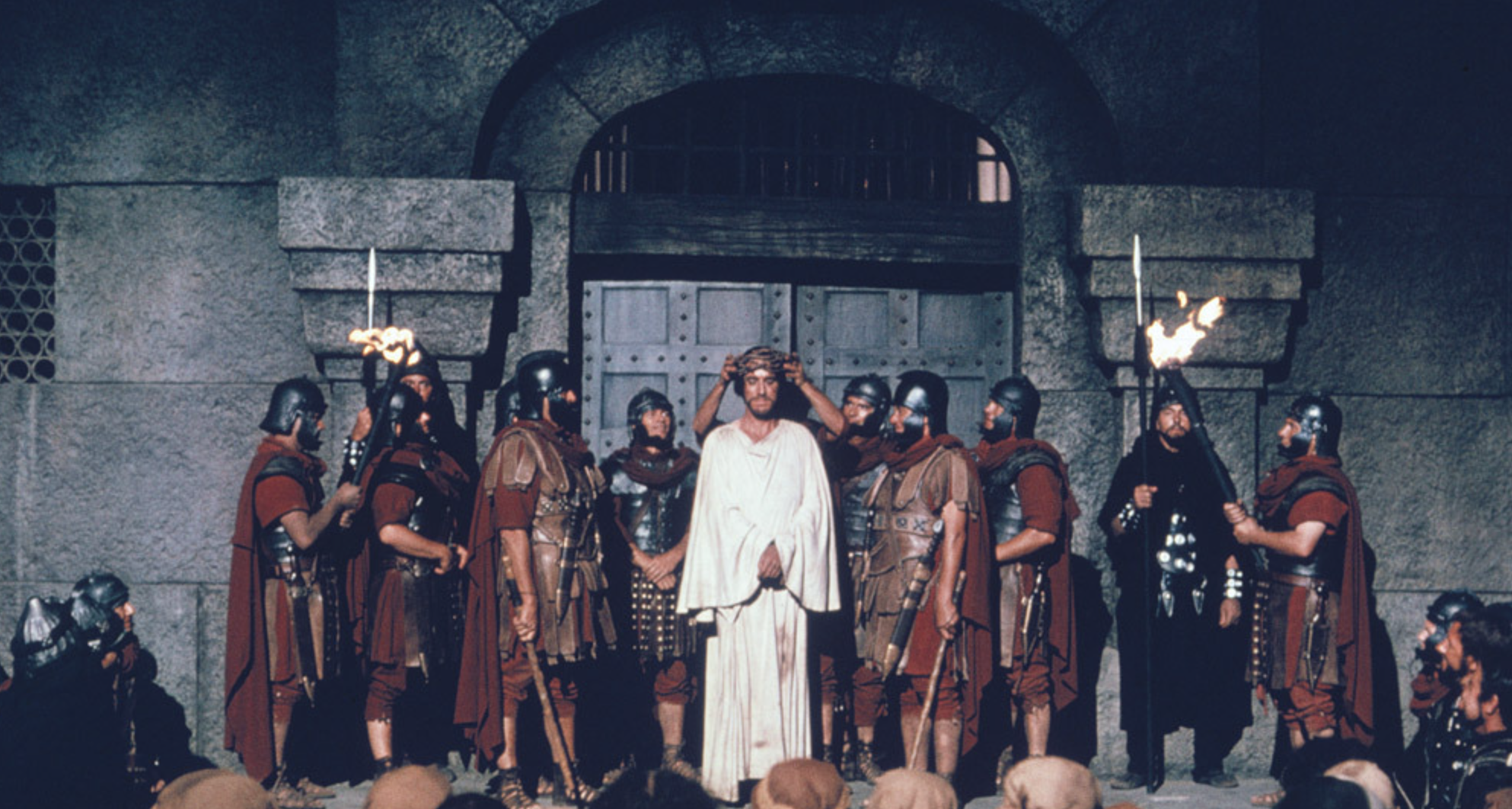
It's not a film which gallivants. Slow and steady, the camera is always positioned to imitate painterly scenes of crowds, never close to any one person's face. Max von Sydow plays Jesus. I like his interpretation— Jesus is not some guy flourishing his arms around with a strange smile, but sits with his followers, speaking in a manner they understand. The look of Jesus also seems to be based on a painting that I'm unfamiliar with. The scene of Satan tempting Jesus in the desert is arresting. Jesus is climbing a mountain and Satan awaits in a cave on the way up. He's played by Donald Pleasence as a wise old man with a sharp tongue.
The critics were right—the film is soporific. But it's also poetic, and its non-epic pace is a nice change from previous attempts. Handel’s “Hallelujah Chorus” is used twice, and it simply doesn't mesh. David Newman's score, on the other hand, is beautiful and well suited. The trial, stations, and crucifixion are very powerfully done and moving.
Sydow as Jesus, Telly Savalas as Pontius Pilate, and Claude Rains as Herod the Great, and Pleasence as Satan stand out. Jose Ferrer as Herod II is solid, but is what he already did in Lawrence as the evil Turkish Effendi. Charlton Heston and Sidney Poitier are the only two notable minor roles. The rest of the big name cast are sidelined pretty badly. It’s not a film where the apostles are highlighted in any major way.
A flawed film with some very special scenes. I still feel the effect of the film a year later.
RYAN'S DAUGHTER 1970
Starring Sarah Miles, Robert Mitchum, Christopher Jones, Leo McKern, and Trevor Howard.
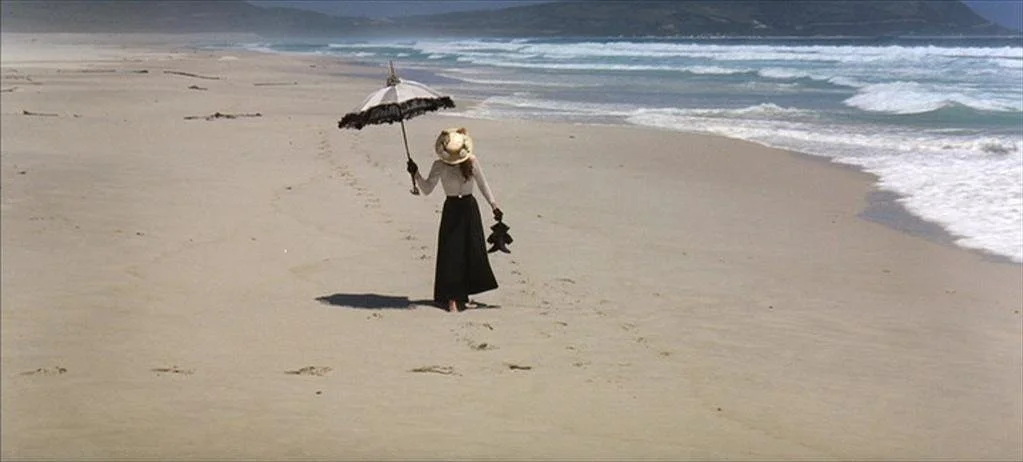
Flaubert's Madame Bovary serves as the basis for the story of Ryan’s Daughter, transported to a small Irish coastal town during World War I. Sarah Miles plays Rosy, the barkeep's daughter. Anxious to get married and pass the gates of fleshly satisfaction, she falls in love with and marries the mild-mannered schoolteacher Charles Shaughnessy, played by Robert Mitchum. She and he share something that the rest of the town don't: they care about culture, especially music, although it's clear she's interested in it for him more than for itself. It becomes apparent their romance was mostly in Rosy’s head, and when a young English officer enters the village they begin a passionate affair.
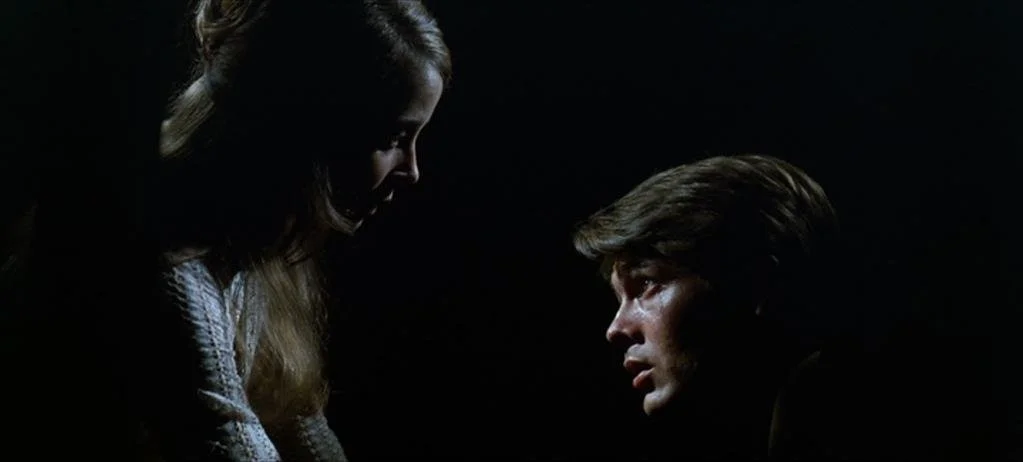
Major Doryan's arrival is the weakest scene in the movie. Christopher Jones is capable enough, but it's clear he's new, and the other actor in the scene, the army captain played by Gerald Sim, is having to do a lot of talking. The poor guy is having to prop up the whole scene with some very weak dialogue while Jones gets to play strong and silent. This scene could have been cut, and if it had it would have boosted the drama of the meeting of Rosy and Doryan. Doryan is PTSD-afflicted, and his traumatic flashbacks reveal him to be no braver than any of his fellow soldiers. Inciting this PTSD episode is done in an interesting way, with Michael (John Mills, in an academy award winning role), the village idiot, rapping his foot against a wood bench. The thudding causes Doryan into an epileptic attack, played to the absolute hilt with the main theme turned into a mad carnival tune. This is the point at which many viewers may scoff, but in addition to Bovary, Lean is also adopting the exaggerated effects of opera, and here the music affects the tone the most. Rosy rushes Michael out of the bar and goes to Doryan. Her touch brings him back to reality, and they kiss. For Rosy, this is the wild, epic, romantic feeling she's been waiting for. For Doryan, it's a sedative, a relief, and a comfort that he's missed from his own wife. They ride staidly into the woods, searching for the best spot. As far as sex scenes go, it's operatic. Natural surroundings parallel the lovemaking (if you’ve seen The Naked Gun 2 ½ this type of metaphorism is done to hilarious effect). At the end Doryan is healed, and so I gather the reason for their romance. Just as Rosy's husband begins to put the pieces together, the lovers realize what their affair really means, and they part.
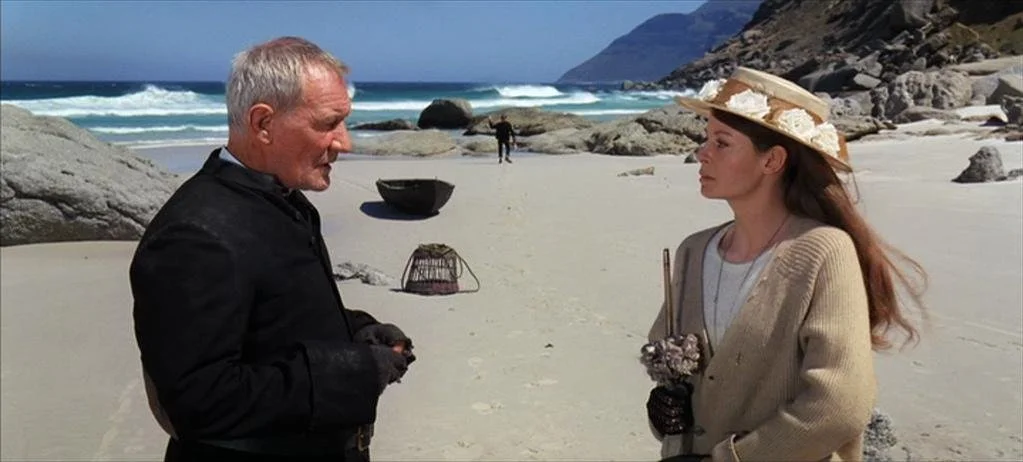
The anti-British revolutionary side plot involving Ryan the barkeep, Tim O’Leary the head revolutionary, and Fr. Hugh never intrudes on the love story. Instead the anti-British revolutionaries are caught by Doryan’s men, creating a political disaster. Lean was too nice a human to make a morally vicious Bovary. His films portray hatred, prejudice, political injustice, poverty— but real stinking villainy only occasionally. Lean may have intended emotional storminess, but he put more of it into the photography than the characters. The result is an odd mixture of kitchen sink realism and exaggerated drama which is immersive and impressive on one hand, but on the other, the moral apathy shown by the characters renders them unmemorable.
It’s not a perfect film, but the jibe that it’s a “3 and half hour long love story” doesn’t count against it. The fact is, Ryan’s Daughter doesn’t feel long. You like being there in that small coastal Irish village, and Lean’s sets and locations are nothing if not immersive.
Ryan’s Daughter ruined Lean’s career. Reviews were so bad that Lean acceded to a meeting with critics from The National Society of Film Critics (a terrifying society) to try and discover what went wrong (a terrible idea). With Pauline Kael and Richard Schickel leading the charge, they proceeded to demolish Lean and the film. Most famously Pauline Kael complained that Ryan’s Daughter wasn’t anything like Brief Encounter, made in black-and-white and with a short runtime. The result was a deep depression on Lean and fourteen years in the wilderness, dreaming but failing with new scripts. In David Lean: A Self-Portrait, Lean speaks about his career up through Ryan’s Daughter. This extended quote gives us an encapsulation of how he thought of his role as storyteller:
“...my goodness there are lonely moments. [...] I think one of the most difficult things about a director's job is that he's got to be a bit of a dreamer, and dreamers don't generally go hand in hand with practical people. And if you're going to be a director you've certainly got to be practical. It's not an airy-fairy business at all, it's a hard job of work like a carpenter. [...] I'm very old now. I've had as it were a kind of classical training in films and I find it hard even at my age to be able to make any great statements about life, and so I try to tell a story about people— about life, but I just have to trust that what pleases me will please an audience, or what excites me will excite an audience. Of course I can be terribly terribly wrong, but if I start wondering what this person or that person will think of it, I'm lost. I can only please myself and hope to God that you people like it. I personally don't feel that I'm capable of making great statements. I think there are very few artists who are. There are people who are acclaimed as such, but all right, give me Shakespeare or Beethoven or somebody like that, but we haven't produced anybody like that in the movies.”
LOST AND FOUND: THE STORY OF COOKE'S ANCHOR (1979)
Starring David Lean, Robert Bolt, and Eddie Fowlie.
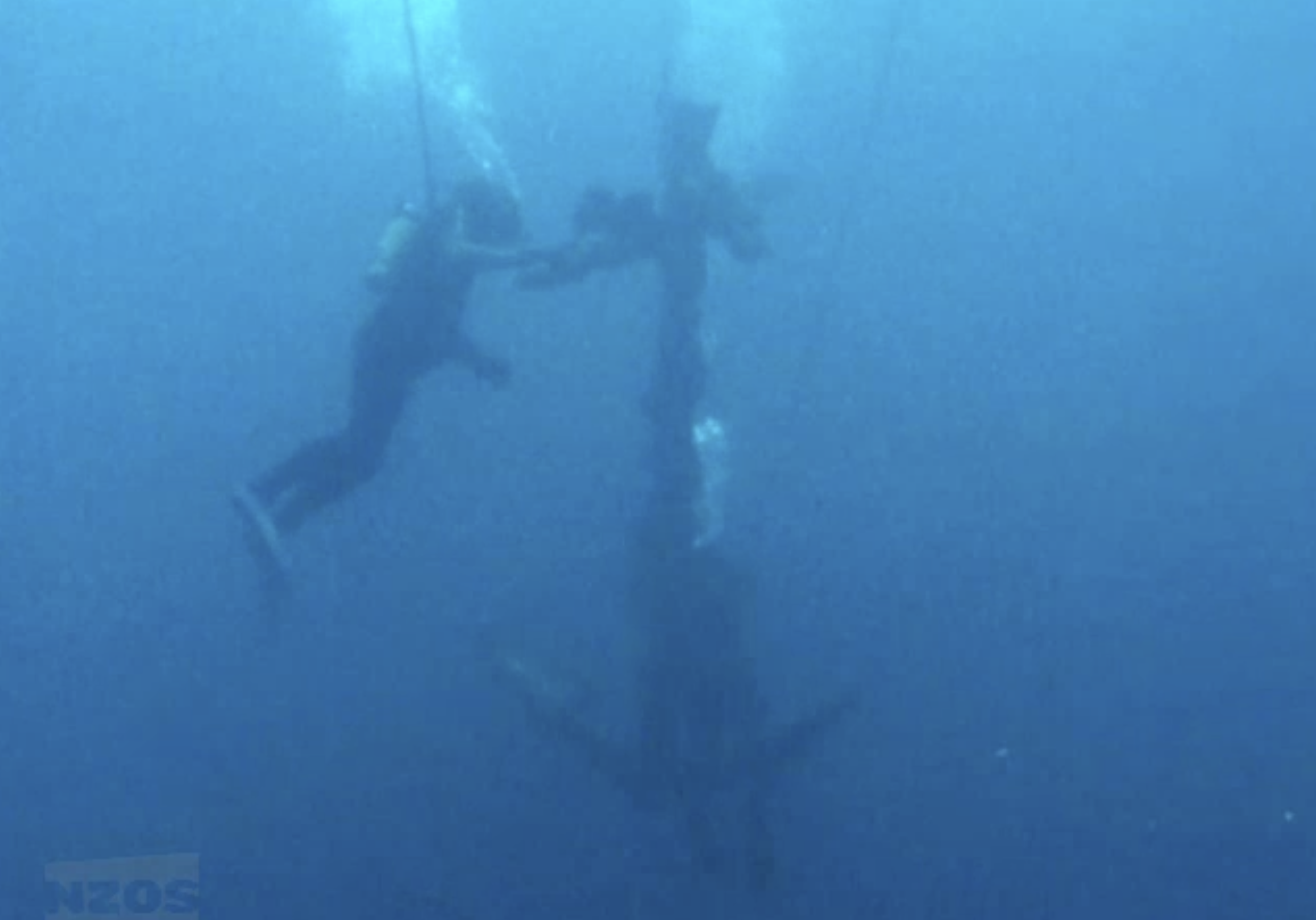
This is David Lean’s only television work (produced for New Zealand TV), a delicious documentary about finding the ship’s anchor from Captain James Cooke’s 1768 voyage to Tahiti. The runtime claims 40 minutes, but is really 36 minutes and change. It encapsulates Lean's ethos in a way, which is that what's shown is what's accomplished: the filming of a beautiful place in a grand, painterly style— a good enough reason to make a film. We travel with Lean, Robert Bolt (collaborating screenwriter), and Eddie Fowlie (special effects director and production designer) as they are out scouting locations for a film about the H.M.S. Bounty. When Fowlie discovers the real location of Captain James Cooke's lost ship anchor, it’s off to the races. Everything about that discovery is captivating. Lean and Fowlie hilariously re-enact their own words from the day of discovery, and the view of the anchor underwater is utterly breathtaking. And, as we discover, it’s enormous.
And wait until you see the "vacuum cleaner."
There's only one safe way to watch this film online, which is through this link from NZOnscreen.com: www.nzonscreen.com/title/lost-and-found-the-story-of-cooks-anchor-1979
It's posted in two parts, one on each tab underneath the video player (it’s also worth reading the few select comments on the article). This film is incredibly scarce and under no circumstances should you try to watch it anywhere else online.
A PASSAGE TO INDIA (1984)
Starring Judy Davis, Peggy Ashcroft, Victor Bannerjee, James Fox, Nigel Havers, and Alec Guinness.
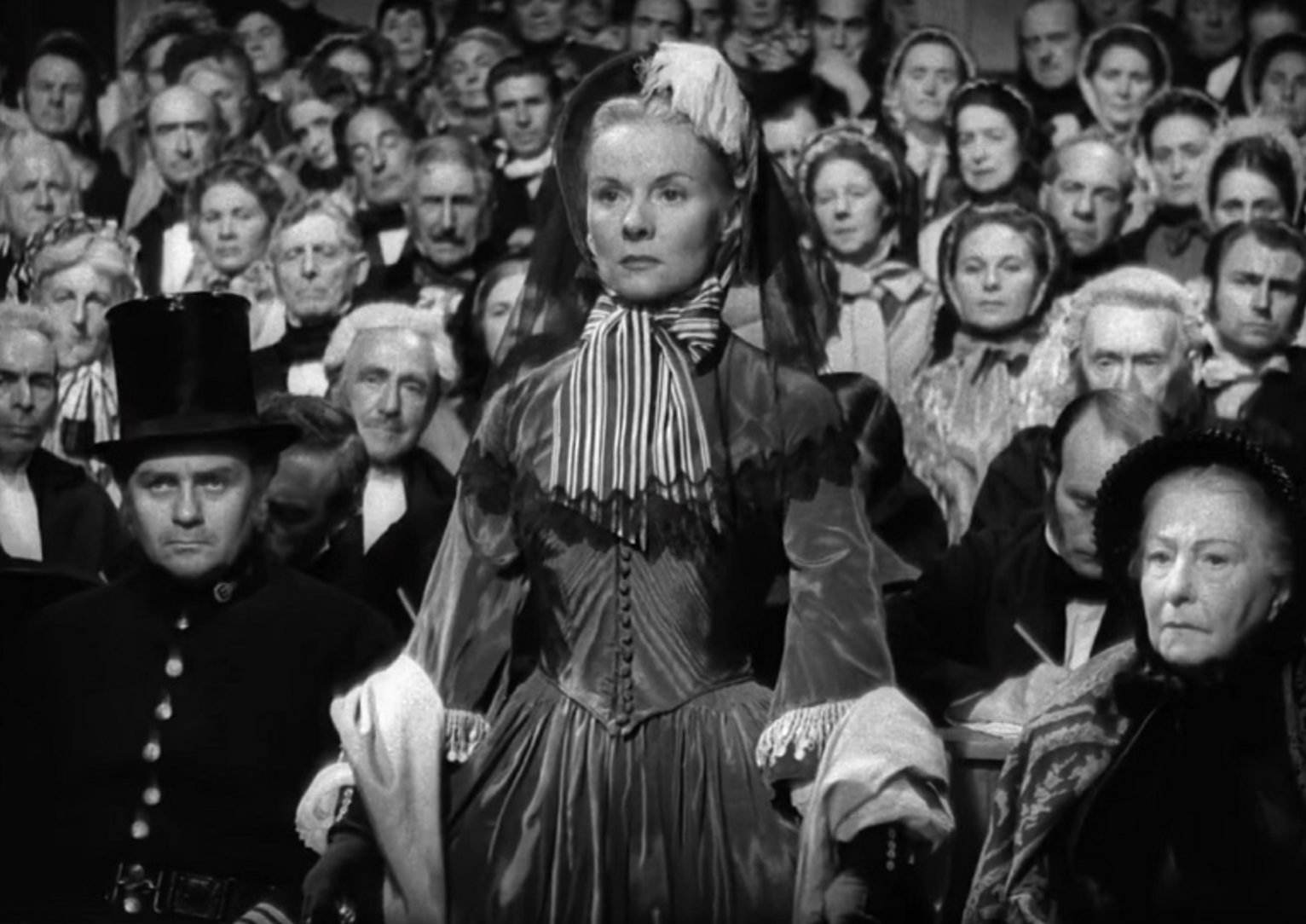
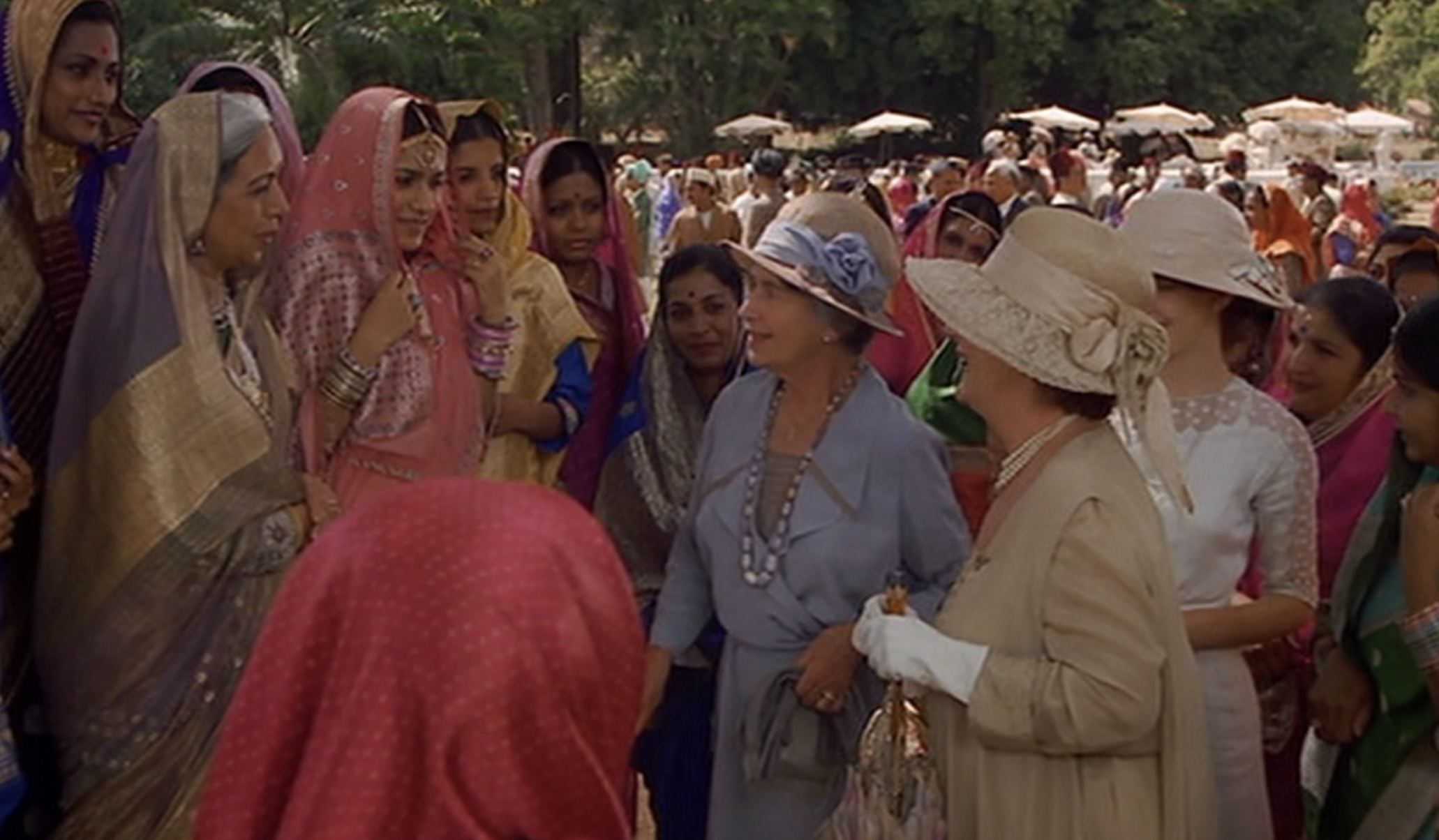
The last film. Adapting E.M. Forster’s 1924 novel feels such a natural fit for David Lean that I'm surprised he hadn't done it already. A Passage to India is a tricky story to pull off without being either too subtle to be effective (it might be that for many), or too ham-fisted. Lean knows where the dark comedy lies in Forster, and where the sympathies. The movie is about British colonialism and racism set in the independence-seeking India of the 1920s. The film depicts obvious and unobvious kinds of racism, and the desperately-pleasing naivete of Bannerjee’s Aziz, paired with James Fox’s Indian-sympathising Fielding, allow us to feel (naively) that things might not be all that bad. And I won’t say anything further about the plot, which needs to be both experienced and recollected by the viewer—like a good mystery, we get all the clues and can piece them together. The ending, and the court case leading up to it, is immensely well done in deploying what’s been built up. I didn’t think of it until just now, but this is the second time Lean has a courtroom scene revolving around the main female character. Although, unlike in Madeleine, she is not the defendant.
Lean is not as cynical as Forster about the British, and so Lean’s generosity for human nature (and who needed much generosity himself) flows out and occasionally touches dangerously on the mystical. Lean’s famous cinematography is still on display, but something has changed: he captures India's beauty, but doesn’t linger. One can’t help but suspect the phantoms of the National Society critics hovering around Lean like the Weird Sisters. But Lean, for good or bad, learned something from that dinner. The operatic push of the previous three films has subsided. An exception near the end: two characters stop the car —and the whole film in its tracks— for a shot of the Himalayas. It looks odd—I’m transported not to the Himalayas, but to that studio background painting in 1948’s Scott of the Antarctic (complete with room echo) doubling as someone’s front yard. After all the natural ruggedness we’ve just witnessed, it’s a strange decision. But, after all, it’s just for a moment. I first watched A Passage to India on the recommendation of my dad, and to my dad’s chagrin I at first glibly dismissed it as being “about nothing.” But dad was right. A Passage to India is a great, great film, one which grows in the memory. And as we roll to a stop, I can truly say David Lean made no bad films, and the best ones are immortal.
My Ranking:
Lawrence of Arabia, 1962
The Bridge On the River Kwai, 1957
A Passage to India, 1984
Hobson’s Choice, 1954
Great Expectations, 1946
Madeleine, 1950
The Passionate Friends, 1949
Oliver Twist, 1948
This Happy Breed, 1944
The Sound Barrier, 1952
Brief Encounter, 1945
Ryan’s Daughter, 1970
Doctor Zhivago, 1965
In Which We Serve, 1942
Blithe Spirit, 1945
Summertime, 1955
Unranked, but loved and appreciated:
Lost & Found: The Story of Cooke’s Anchor, 1979
The Greatest Story Ever Told, 1965 (the Herod scenes)